
Before I ever met John, I knew three things about him.
He was 6'6". He was a Black man. He cursed a lot.
That’s what was passed down to me when my supervisor gave me the case. John had been through several case managers before me. The nurses, I was told, were afraid of him. He was “difficult.” The adjuster wanted “a strong case manager who could handle it.”
None of it was written in his file. It didn’t need to be. The label arrived before he did.
John’s injury was a few years old. He’d had surgery on his lower back, and he was still in pain. He had an attorney. He saw a pain management doctor every month and a psychiatrist twice a month for medication and counseling.
When I met him, I greeted him the way I greet everyone: cheerfully. Then I asked about his injury.
He shut it down.
“I can’t talk to you because my lawyer said that I shouldn’t trust you.”
That’s the moment a label usually gets confirmed.
“That’s fine,” I said. “We won’t talk about your injury.”
And we didn’t. For the next six weeks, after he’d seen his doctors privately, I met with John in a cold, white medical office, and we talked about everything else. His dreams. His home life. His family.
In those first visits, John cursed. His shoulders sat up by his ears.
Then, little by little, something changed. One day he smiled, and his shoulders came down. The cursing stopped. He started talking to me the way you’d talk to a friend.
When he talked about his aspirations, he told me about his land, and about gardening. So I helped him put himself in that garden, where he could hear it, smell it and feel it.
He called it “getting lost in dirt.” The smell of fresh soil. The feel of it moving through his hands as he planted bulbs and seeds. His face lit up as he told me he’d plant marigolds around his herbs and tomatoes to keep the bugs away, and basil beside the tomatoes to give them a taste all their own. He talked about rubbing rosemary and breathing in its aroma.
For a little while, that cold office wasn’t cold anymore. It was his garden.
Somewhere in those weeks, I stopped seeing the man who had been described to me.
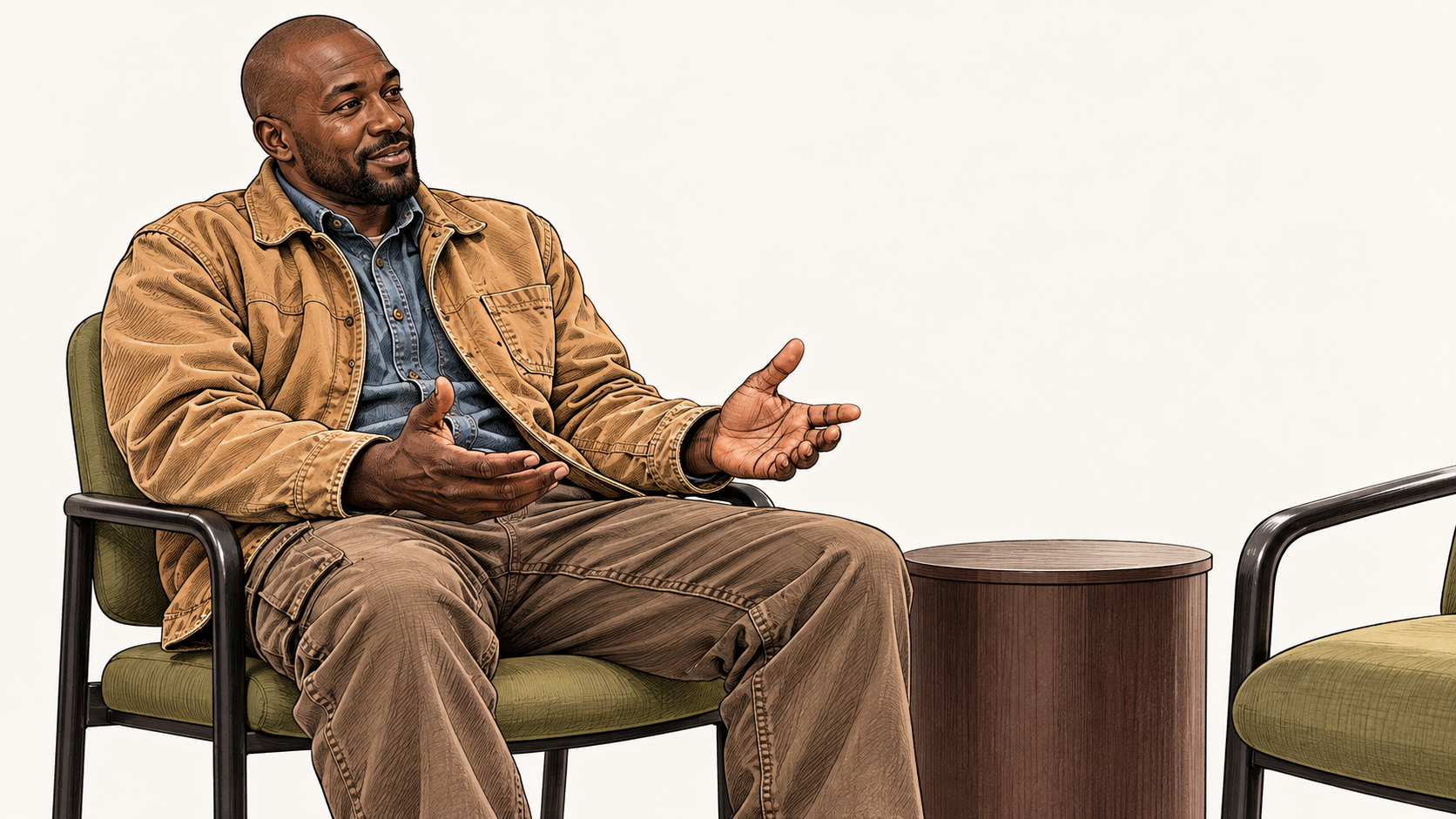
A man in a chair, now leaning back with his shoulders down and a slight smile, talking with someone just out of frame.
At the six-week mark, I went with John to see his psychiatrist. Little did I know it would be our last visit.
When I walked in, the psychiatrist said, “I am releasing him from care.”
“What happened?” I asked.
“John requested to be released.”
As we walked out of the building, John stopped me. “Thank you!”
“Why are you thanking me?”
“You gave me my manhood back.”
He told me what the past few years had taken. He could no longer do the manual labor he’d always done, and he’d lost his job. He didn’t know how to provide for his family.
“I come off hard and abrupt because everything has been taken away from me,” he said. “And you didn’t judge me. Instead, you gave me hope. And now, I want to put workers’ comp behind me and start a new chapter in life.”
A year later, John was farming his land and selling what he grew to his community.
I don’t believe anyone ever said “difficult” to John directly. They didn’t have to.
When people believe something about you, it shows in how they treat you. It becomes an unspoken language, and the person on the other end learns to read it. Little by little, they start to believe it too. A person’s actions follow their thoughts, and the cycle keeps going.
Call a child stupid, and that child grows up believing it. Call a person a minority, a word that means “less than,” and they start to carry that too. Label an injured worker difficult, and the label starts to look true.
That’s why I stand for the cause, I’m Not Your Minority. It’s a cause built on every person’s right to decide who they are, instead of wearing the label someone else handed them. Equality starts from within. If you believe you can, you will.
So I’ll leave you with this: What label came with the last file that crossed your desk, and what might it be hiding?
To bring SAUBOU Consulting’s nurse case managers onto your workers’ compensation cases, contact us through our website or connect with me on LinkedIn.
Kimyette Saunders-Bouie, RN, CCM, is the founder of SAUBOU Consulting.
